

Earthy living room ideas can transform an ordinary space into a warm, comfortable, and inviting home. By combining natural colors, soft textures, wooden furniture, and thoughtful accessories, you can create a living room that feels both stylish and practical. Shades such as cream, terracotta, rust, and chocolate brown bring warmth to an interior, while natural materials add depth and character. Whether you have a spacious living room or a small apartment, these colors and decorating techniques can work beautifully in different settings.
From styling a cream sofa with rust cushions to choosing earthy abstract wall art, there are many ways to introduce this timeless look into your home. You can also use indoor plants, textured rugs, wooden coffee tables, and warm lighting to create a balanced atmosphere. Moreover, you do not need to replace all your furniture to achieve the desired result. Simple changes, carefully selected accessories, and a coordinated color palette can make a noticeable difference. Explore these ten earthy living room ideas to discover practical inspiration for creating a welcoming space that reflects your personal style.
1. Cream Sofa with Rust Cushions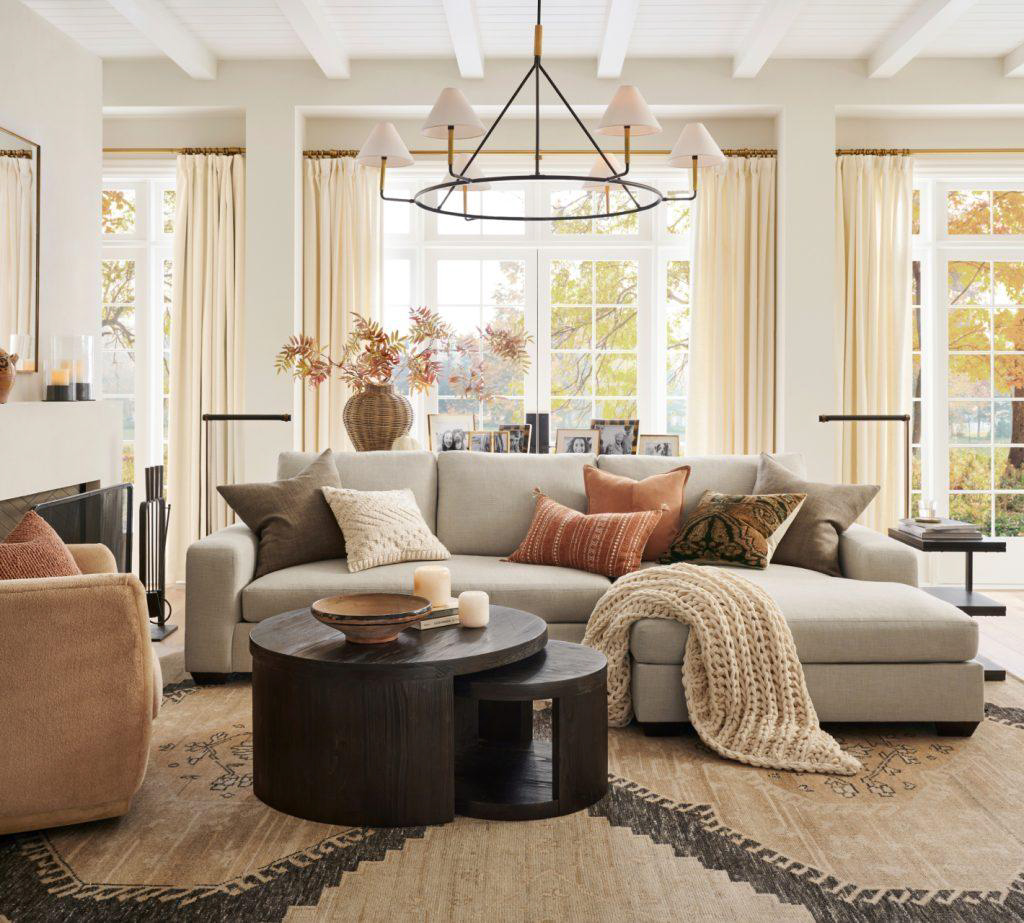
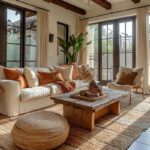
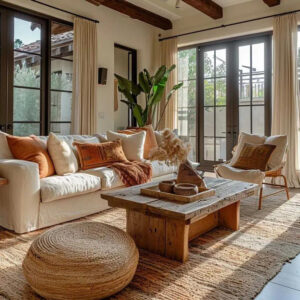
A cream sofa paired with rust cushions creates a warm, welcoming living room without making it look too dark. The light upholstery keeps the space bright, while terracotta and burnt-orange accents add depth and character. Add a wooden coffee table, a textured beige rug, and soft curtains to complete the look. For a balanced style, mix plain cushions with one or two subtle patterns. This way, the sofa remains attractive without looking overcrowded. The combination works especially well in rooms with natural daylight. Finally, a small ceramic vase or a brown throw can bring the whole arrangement together.
Make:
Arrange two or three rust-cultured cushions across a cream sofa to create a balanced seating area. Then, add a brown throw over one arm and place a wooden coffee table in front. Complete the look with a beige rug and a small ceramic vase. Keep the accessories simple so the sofa remains the main feature and the room does not feel crowded.
Materials:
Start with a cream upholstered sofa and rust-cultured cotton or linen cushion covers. Add a brown cotton or knitted throw, a natural wooden coffee table, and a beige textured rug. A ceramic vase in a warm, neutral shade can provide the finishing touch. Together, these materials create a comfortable, coordinated, and visually balanced living room.
Benefits:
This combination adds warmth while keeping the room bright and open. Cream upholstery provides a neutral background, while rust cushions introduce color without overwhelming the furniture. It is also easy to update the look by changing cushion covers, throws, or small accessories. As a result, you can refresh your living room without replacing the main furniture.
Internal link: Explore [abstract wall art](https://nestorahaven.com/abstract-wall-art/) for artwork that complements rust and cream tones.
2. Terracotta Accent Walls for Warm Living Rooms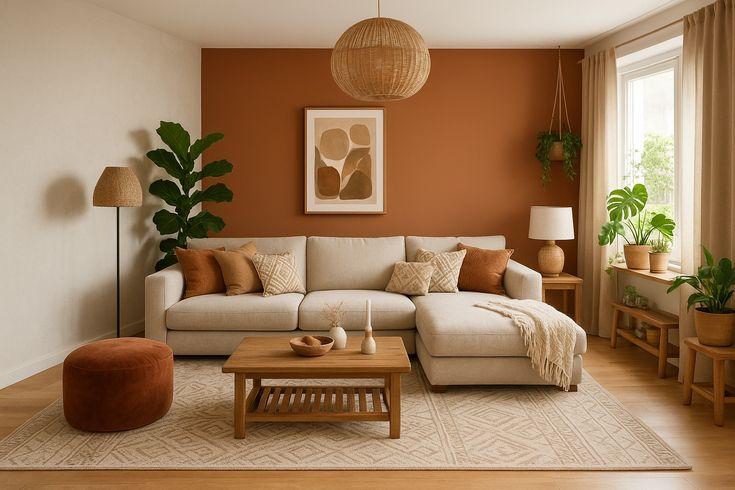
A terracotta accent wall gives a living room a rich, earthy character and helps cream furniture stand out. This warm, reddish-brown shade pairs naturally with wood, linen, and neutral accessories. Instead of painting every wall, choose the area behind the sofa or fireplace, especially if the room is small. Next, add framed artwork, a wooden shelf, or a few handmade ceramic pieces for visual interest. Soft lighting makes the color feel even more inviting in the evening. If painting is not practical, terracotta artwork or removable wallpaper can create a similar effect with less commitment.
Make:
Choose one wall behind the sofa or near the fireplace and paint it terracotta. Keep the other walls cream or beige to maintain balance. Add a wooden shelf, simple framed artwork, and ceramic accessories to complement the color. Finally, use soft lighting to create a welcoming atmosphere. Avoid adding too many decorations, as a feature wall looks best when it has room to stand out.
Materials:
Prepare the wall with a suitable primer before applying terracotta interior paint. You will need paint rollers, brushes, masking tape, and protective sheets for a neat finish. Add a wooden shelf, neutral picture frames, and ceramic decorative pieces to complete the design. If painting is not possible, removable wallpaper or terracotta-cultured artwork can offer a similar look without making a permanent change.
Benefits:
A terracotta accent wall adds depth, personality, and warmth without requiring a full renovation. It creates a focal point and complements cream sofas, brown furniture, and neutral textiles. Painting one wall can also cost less than repainting the entire room. Therefore, it is a practical choice for anyone who wants to introduce earthy colors while keeping the rest of the interior simple and versatile.
Internal link: Explore [abstract wall art](https://nestorahaven.com/abstract-wall-art/) for complementary accent-wall inspiration.
3. Chocolate Brown Leather Sofas for Earthy Interiors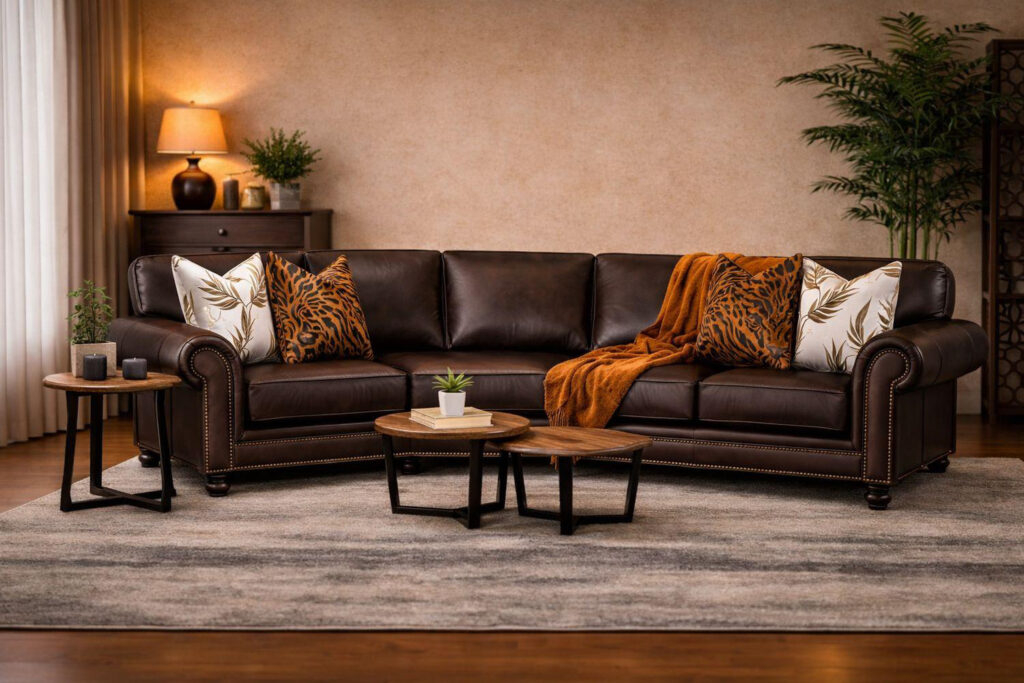
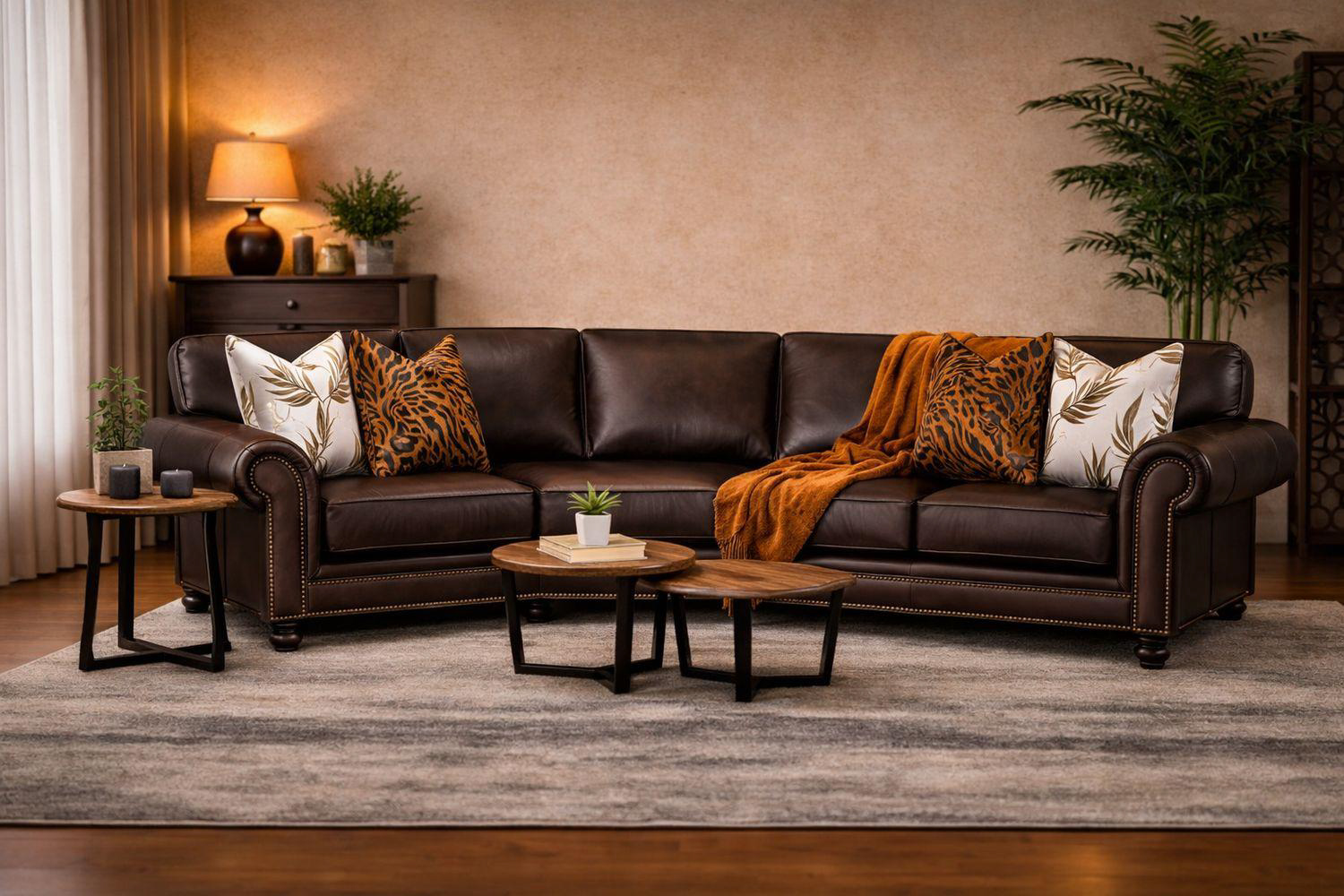
A chocolate brown leather sofa brings a classic, grounded look to a living room. Its deep color works well with cream walls, rust cushions, and natural wood furniture. However, to prevent the space from feeling too dark, balance the sofa with a light-colored rug and curtains. A textured throw softens the leather, while a warm table lamp creates a cozy atmosphere after sunset. Choose accessories in a few coordinated shades rather than adding too many competing colors. This combination suits both contemporary and vintage-inspired interiors. You can also refresh the look by changing cushion covers or adding seasonal accents.
Make:
Position the chocolate brown sofa against a cream or light beige wall to create contrast. Add cream cushions and one or two rust-cultured accents to connect the sofa with the room’s color palette. Place a walnut side table nearby and use a light-colored rug to soften the darker furniture. Finally, add a table lamp and a textured throw for comfort.
Materials:
Choose a chocolate brown leather or quality faux-leather sofa as the main furniture piece. Pair it with cream cotton cushions, rust-cultured cushion covers, and a soft neutral throw. A walnut or medium-brown wooden side table adds warmth, while a beige rug balances the darker upholstery. A table lamp with a warm-white bulb can also highlight the room’s textures and create comfortable lighting.
Benefits:
A chocolate brown sofa creates a strong focal point and gives the living room a rich, timeless appearance. Its deep color pairs naturally with cream, rust, and wooden finishes, making it suitable for modern or traditional interiors. Meanwhile, light textiles prevent the room from feeling too heavy. Since cushion covers are easy to replace, you can update the look seasonally without buying new furniture.
4. Small Cozy Living Rooms with Earthy Colors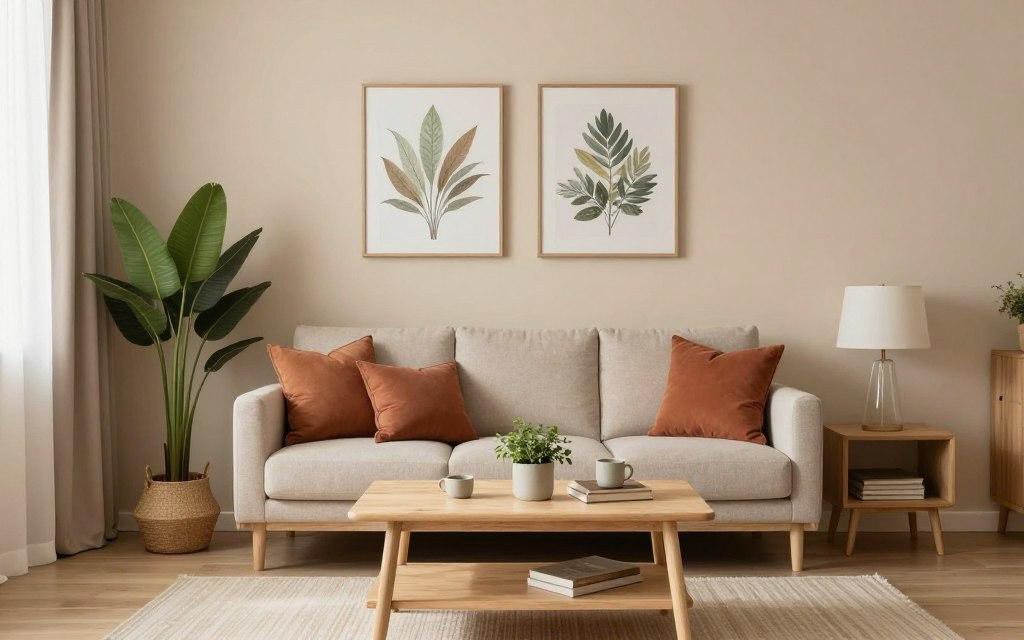
A small living room can feel inviting when cream, brown, and terracotta are used thoughtfully. Start with a compact cream loveseat to keep the seating area visually open. Then, add one or two rust cushions, a narrow wooden coffee table, and a light rug to define the space without overwhelming the floor. Wall-mounted shelves provide room for books and small decorative objects while keeping the floor clear. Choose curtains that closely match the wall color for a more continuous look. Rather than filling every corner, leave some breathing room around the furniture. This makes the layout more practical and comfortable for everyday use.
Make:
Begin with a compact cream sofa or loveseat that fits comfortably in the room. Add one or two rust cushions, a narrow wooden coffee table, and a light rug to define the seating area. Keep the main walkway clear and use wall-mounted shelves for books and accessories. Curtains that match the wall color can make the room feel more continuous, while open space allows easier movement.
Materials:
Choose compact seating with cream or beige upholstery, rust-cultured cushions, and a slim wooden coffee table. A light neutral rug can define the seating zone without overwhelming the floor. Add wall-mounted shelves, lightweight curtains, and a few small decorative accessories. Where possible, select furniture with exposed legs or a simple design. These details can help a smaller living room feel less crowded.
Benefits:
A thoughtful layout helps a small living room feel more organized, comfortable, and open. Compact furniture provides useful seating without taking up unnecessary floor space, while wall-mounted shelves add storage without creating clutter. In addition, light colors help the room appear brighter, and rust accents bring warmth and personality. This approach is especially useful in apartments and smaller homes where every area needs to remain practical.
5. Natural Textures for Warm Earthy Living Rooms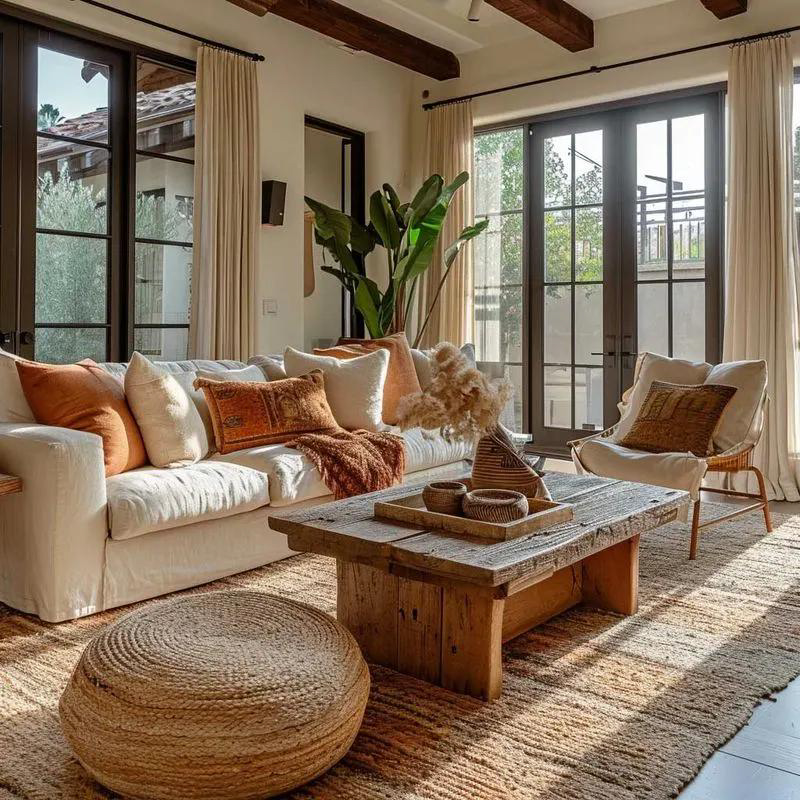
Natural textures help a living room feel comfortable and visually interesting, even when the color palette is simple. Combine a jute rug with linen curtains, woven baskets, and a soft cotton throw in rust or cream. Wooden furniture adds another layer of warmth, while handmade ceramics introduce subtle variation. The key is to mix textures rather than add too many decorative objects. For example, a smooth wooden table looks appealing beside a woven basket or a textured cushion. Keep the colors consistent so the different materials work together. This approach suits relaxed, rustic, and contemporary interiors without requiring expensive accessories.
Make:
Combine natural textures to create a comfortable living room with visual depth. Place a woven rug beneath the seating area, add linen curtains, and introduce cotton cushions with a soft throw. Use wooden furniture as a warm foundation and display a few woven baskets or handmade ceramic accessories. Keep the color palette consistent with cream, brown, and rust so the materials complement one another without making the room feel busy.
Materials:
Select a jute or natural-fiber rug, linen curtains, cotton cushion covers, and a knitted or woven throw. Add wooden furniture, rattan baskets, and handmade ceramic pieces to introduce different finishes. Since natural materials vary in color and texture, choose pieces that suit the room’s existing palette. Combining smooth, rough, soft, and woven surfaces creates a layered appearance without relying on expensive decorative objects.
Benefits:
Layering natural textures makes a neutral living room more interesting without introducing too many colors or patterns. Different surfaces add depth and help the furniture and accessories look thoughtfully arranged. This approach suits rustic, minimalist, and contemporary interiors, so it can be adapted to different preferences. It also encourages the use of versatile materials that can be rearranged or reused when you refresh the room.
6. Indoor Plants for Earthy Living Room Décor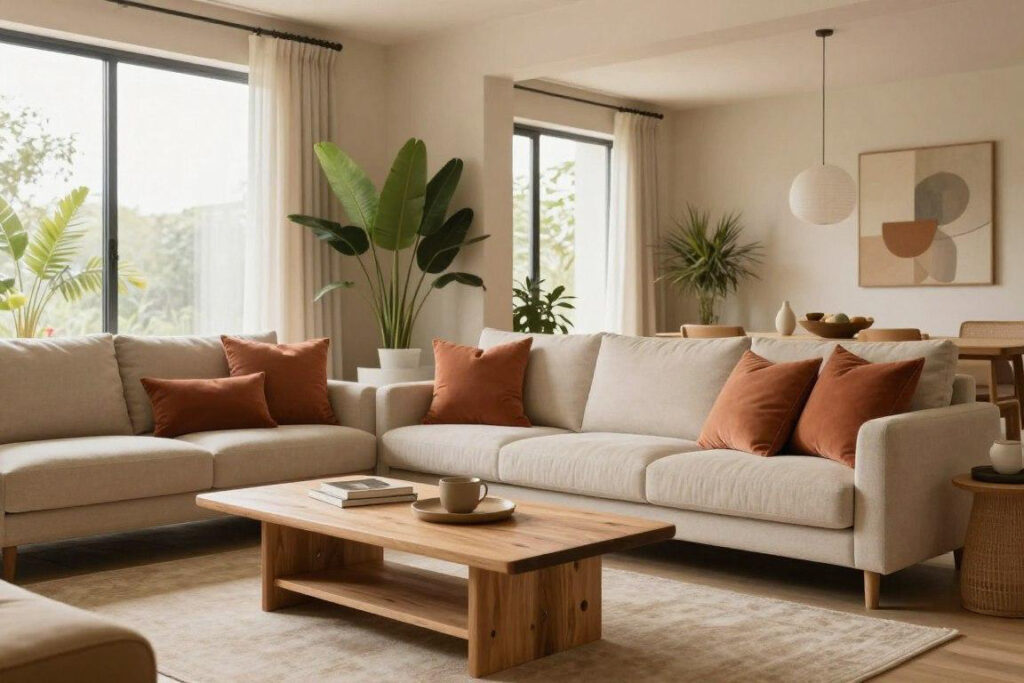
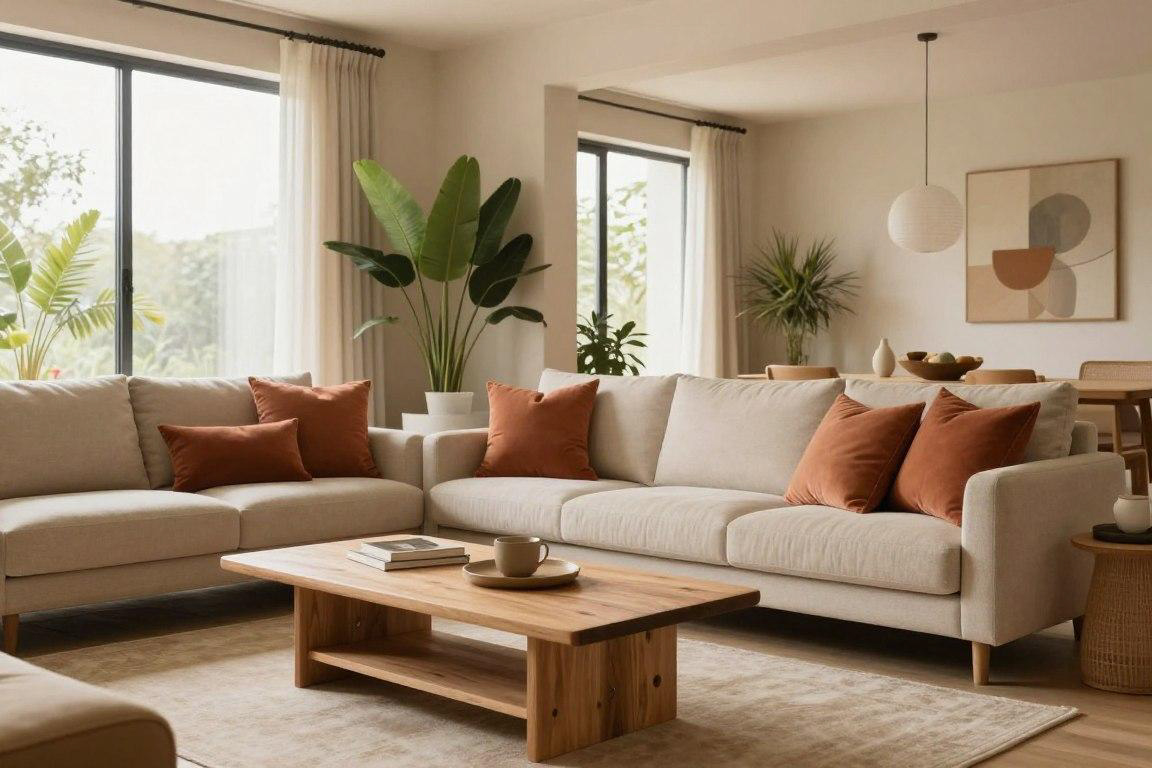
Indoor plants bring a fresh contrast to a living room decorated in brown, rust, and cream. Green leaves stand out against neutral walls, while terracotta pots reinforce the earthy palette. Place a taller plant near a bright window if the light suits its needs, and use smaller plants on shelves or side tables. However, leave enough space around each plant so the arrangement does not feel crowded. A wooden planter stand can add height and help group pots of different sizes. If natural light is limited, choose plants that can thrive in those conditions rather than selecting them only for their appearance.
Make:
Place a taller indoor plant near a window that provides suitable light, then arrange smaller plants on side tables or shelves. Use terracotta pots to reinforce the color scheme and wooden stands to introduce different heights. Leave space between the plants and surrounding furniture to maintain balance. Choose plants according to the available light and the care you can provide, rather than choosing them for appearance alone.
Materials:
Gather indoor plants, terracotta or ceramic pots, potting mix, drip trays, and wooden plant stands. Choose containers that complement the room’s cream, brown, and rust palette. For shelves, select plants that suit the available light and space. If the room receives little natural light, choose varieties that tolerate those conditions. Make sure the pots have suitable drainage and that the stands can safely support their weight.
Benefits:
Greenery introduces a natural color that contrasts beautifully with brown furniture, cream upholstery, and terracotta accessories. Plants can soften furniture lines and make empty corners feel more complete. Different plant heights also add variety without requiring extra decorative furniture. By choosing plants that suit the room’s lighting and maintenance needs, you can create an attractive arrangement that remains practical for everyday living.
7. Rust Accent Chairs for Warm Living Rooms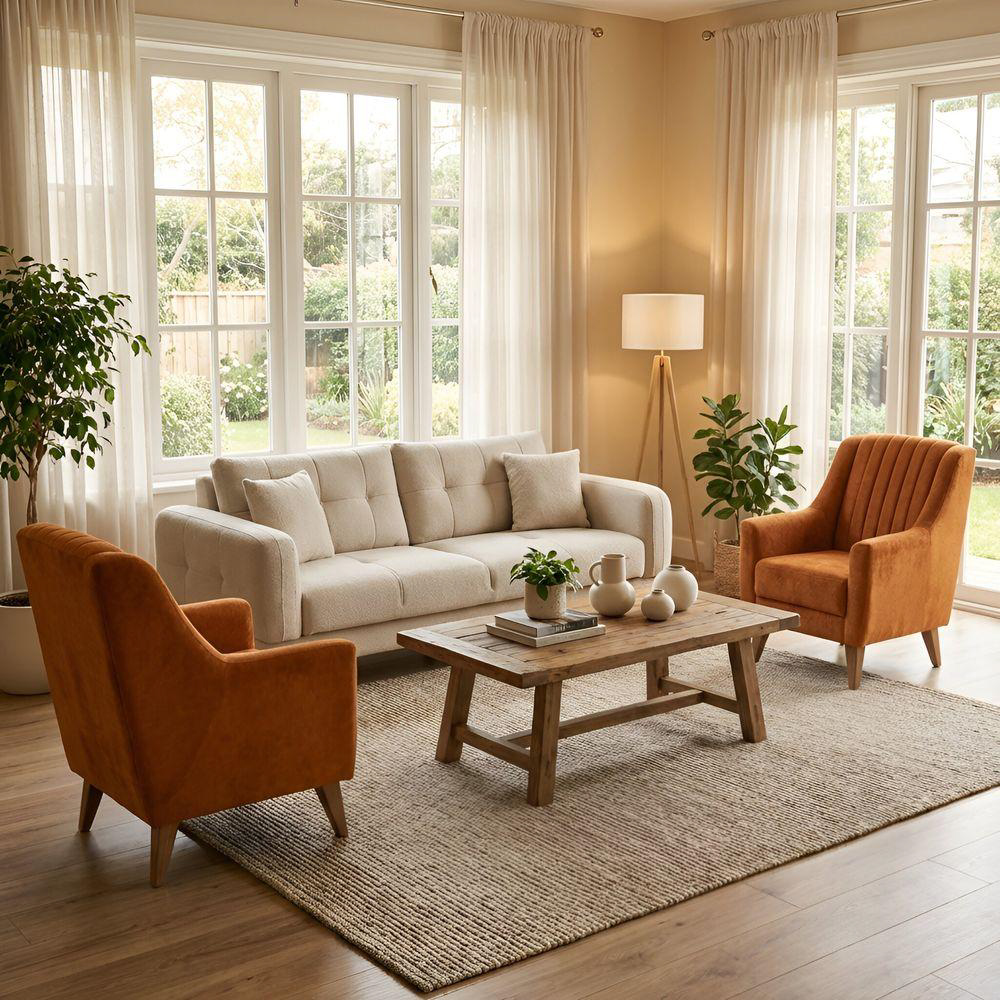
Rust accent chairs are an effective way to introduce color without replacing the main furniture in a living room. Against cream walls, a rust chair creates a focal point, especially when paired with a brown wooden side table and a neutral rug. Position the chair near a window or at the edge of the seating area, leaving enough room for comfortable movement. A cushion in a related shade can connect the chair to the sofa, while a small lamp makes the corner useful for reading. This arrangement is ideal for anyone who wants to refresh a room with a few carefully chosen pieces.
Make:
Introduce one or two rust-cultured chairs to add warmth to a living room with neutral walls and a cream sofa. Position them near the coffee table or at the edge of the seating area, leaving enough space for movement. Add a wooden side table and a neutral rug to connect the arrangement. A cushion in a complementary shade can tie the chairs into the rest of the room.
Materials:
Choose rust-cultured accent chairs upholstered in a fabric that suits your lifestyle and cleaning needs. Pair them with a wooden side table, a beige or cream rug, and a cushion in a related earthy shade. A table lamp or floor lamp can make the seating corner more useful for reading. If the room already contains dark furniture, select chair legs and finishes that complement the existing pieces.
Benefits:
Rust accent chairs introduce color without requiring you to replace the main sofa or other large furniture. They provide extra seating and can help define a conversation area in an open-plan room. The earthy shade works well with cream, beige, and brown, making it easy to coordinate with existing décor. This is a practical way to refresh a living room gradually while keeping future design changes simple.
8. Earth-Tone Abstract Art for Living Rooms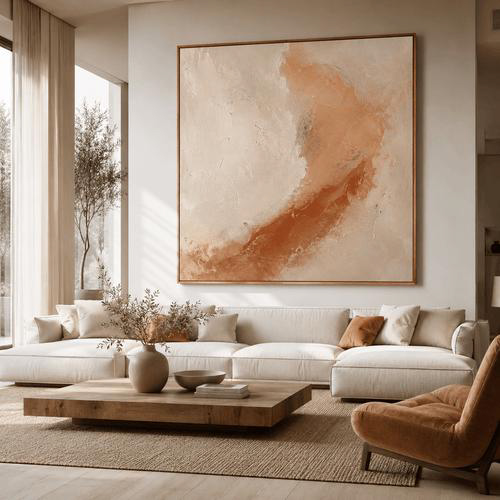
Earth-tone abstract wall art can connect the different colors in a living room and make the overall design feel intentional. Look for artwork that combines brown, rust, beige, and cream in a balanced composition. Above a sofa, choose a piece that suits the furniture’s width and leave enough space between the frame and the seating. Wooden or black frames can work well, depending on the room’s finishes. If the artwork contains several colors, repeat one or two of them in cushions or a throw. This simple detail helps the display feel coordinated without requiring every accessory to match exactly.
Make:
Choose artwork that combines brown, rust, beige, and cream to connect the colors in your living room. Hang one large piece above the sofa or arrange two coordinated prints with even spacing. Measure the wall and furniture before choosing the artwork so the display feels proportionate. Use a wooden or black frame that complements nearby finishes, and repeat one or two colors from the artwork in cushions or a throw.
Materials:
Select a canvas or art print featuring a balanced combination of earthy colors. You may need a wooden or black frame, measuring tape, suitable wall fixings, and a level for accurate placement. Check the artwork’s dimensions before hanging it above the sofa or console table. Choose frame materials that complement your furniture, and consider the wall color and lighting so the artwork remains visible and balanced.
Benefits:
Earth-tone wall art adds personality and creates a focal point without taking up valuable floor space. It can visually connect cushions, rugs, curtains, and furniture by repeating colors already present in the room. A well-sized artwork also helps an empty wall feel more complete. For more inspiration, explore abstract wall art to discover compositions and color combinations that complement your interior.
Internal link: Explore [abstract wall art ideas](https://nestorahaven.com/abstract-wall-art/) for more inspiration.
9. Wooden Coffee Table Styling with Earthy Décor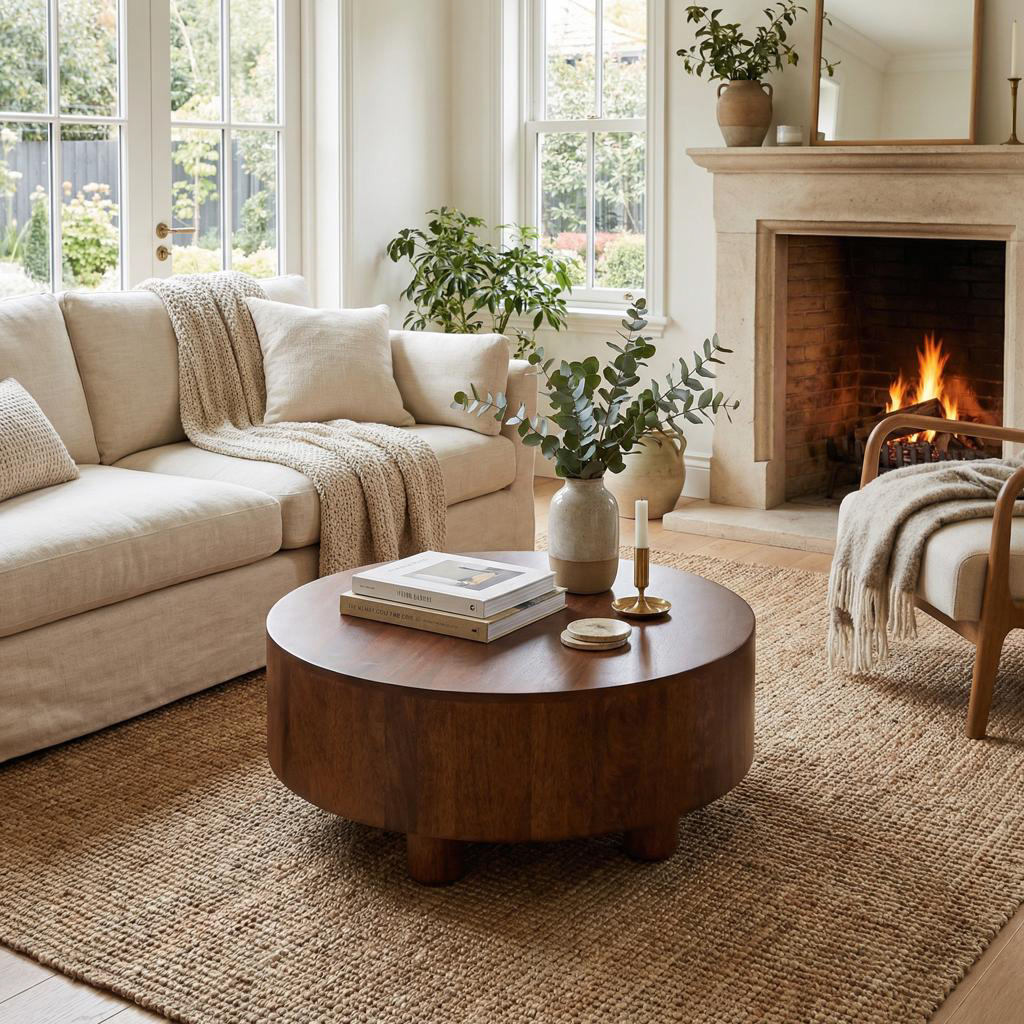
A wooden coffee table can become a practical decorative feature when its surface is styled with a few well-chosen objects. Start with a tray to group a ceramic vase, a candle, or a stack of books. Choose accessories in cream, rust, and brown so they connect with the surrounding furniture. Vary the height of the objects to create a balanced arrangement, but leave enough open space for cups and everyday items. A small plant or a branch in a simple vase can add a natural touch. The best arrangement looks considered without making the table difficult to use.
Make:
Arrange three or four decorative objects on a coffee table to create a simple, balanced display. Start with a tray, then add a vase, a small stack of books, and a candle or compact plant. Vary the height of the objects to make the arrangement more interesting. Leave part of the surface clear for everyday use, and choose accessories in cream, brown, or rust to connect the table with the surrounding furniture.
Materials:
Use a coffee table with a finish that complements your living room furniture. Add a tray, a ceramic vase, a few books, and a candle or small plant. Choose accessories in earthy colors to maintain a consistent palette. A tray can help group objects and make cleaning easier. Before arranging the display, consider the table’s size and leave enough space for cups, remotes, and other everyday items.
Benefits:
A styled coffee table helps the seating area feel organized and visually connected. Grouping accessories on a tray prevents objects from looking scattered, while varying their heights creates a balanced display. Wooden finishes introduce warmth and complement cream upholstery and rust accents. Keeping part of the tabletop empty also preserves its function, allowing the table to remain useful rather than becoming purely decorative.
Internal link: Coordinate the table display with colors from [abstract wall art](https://nestorahaven.com/abstract-wall-art/).
10. Elegant Evening Lighting for Earthy Living Rooms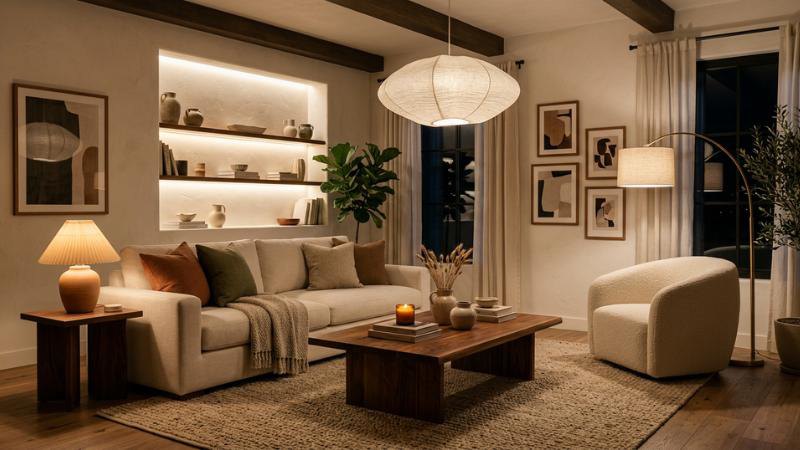
Warm lighting can change the atmosphere of a living room decorated in cream, brown, and rust. Instead of relying on a single bright ceiling light, combine a table lamp, a floor lamp, and softer ambient lighting where practical. Cream upholstery reflects light gently, while dark wood furniture adds contrast. Rust cushions and a textured throw bring color into the seating area without overwhelming the room. Choose warm-white bulbs and position lamps to reduce glare on screens and reflective surfaces. A few candles or ceramic accessories can complete the arrangement. Keep walkways and table surfaces clear so the room remains comfortable for everyday use.
Make:
Create a relaxing evening atmosphere by combining a table lamp, a floor lamp, and soft ambient lighting where practical. Position the lights around the seating area to create a comfortable glow instead of relying only on a bright ceiling light. Add cream cushions, a textured throw, and rust accents to complement the lighting. Keep lamps away from walkways and position cables safely to maintain a practical layout.
Materials:
Choose table and floor lamps with shades that complement your style, along with warm-white LED bulbs suitable for the fixtures. Add cream upholstery, brown wooden furniture, and rust-cultured textiles to reinforce the palette. A ceramic vase or a few simple decorative accessories can complete the arrangement. Check bulb compatibility and brightness before purchasing, and position lights to minimize glare on television screens or other reflective surfaces.
Benefits:
Layered lighting makes a living room more comfortable and adaptable after sunset. Table lamps and floor lamps create softer areas of light for reading, conversation, or relaxation, while warm-white bulbs complement earthy colors and natural textures. Multiple light sources also provide more flexibility than a single ceiling fixture. When arranged thoughtfully, the lighting improves the room’s atmosphere while keeping the space practical for everyday activities and evening gatherings.