

https://nestorahaven.com/blue-shutters-and-doors/Abstract wall art is a simple way to add personality, color, and visual interest to a living room. From oversized canvas paintings to minimalist geometric designs, the right artwork can transform an empty wall into an attractive focal point. However, choosing a suitable design involves more than finding a beautiful picture. Size, colour, materials, placement, and the surrounding furniture all influence the final look.
Whether you prefer warm neutral tones, bold colours, or handmade designs, abstract wall art offers plenty of ways to express your style. The following ideas explain how to create or arrange different designs, which materials you need, and how each option can improve your living space.
1. How to Hang Two Large Frames Above a Sofa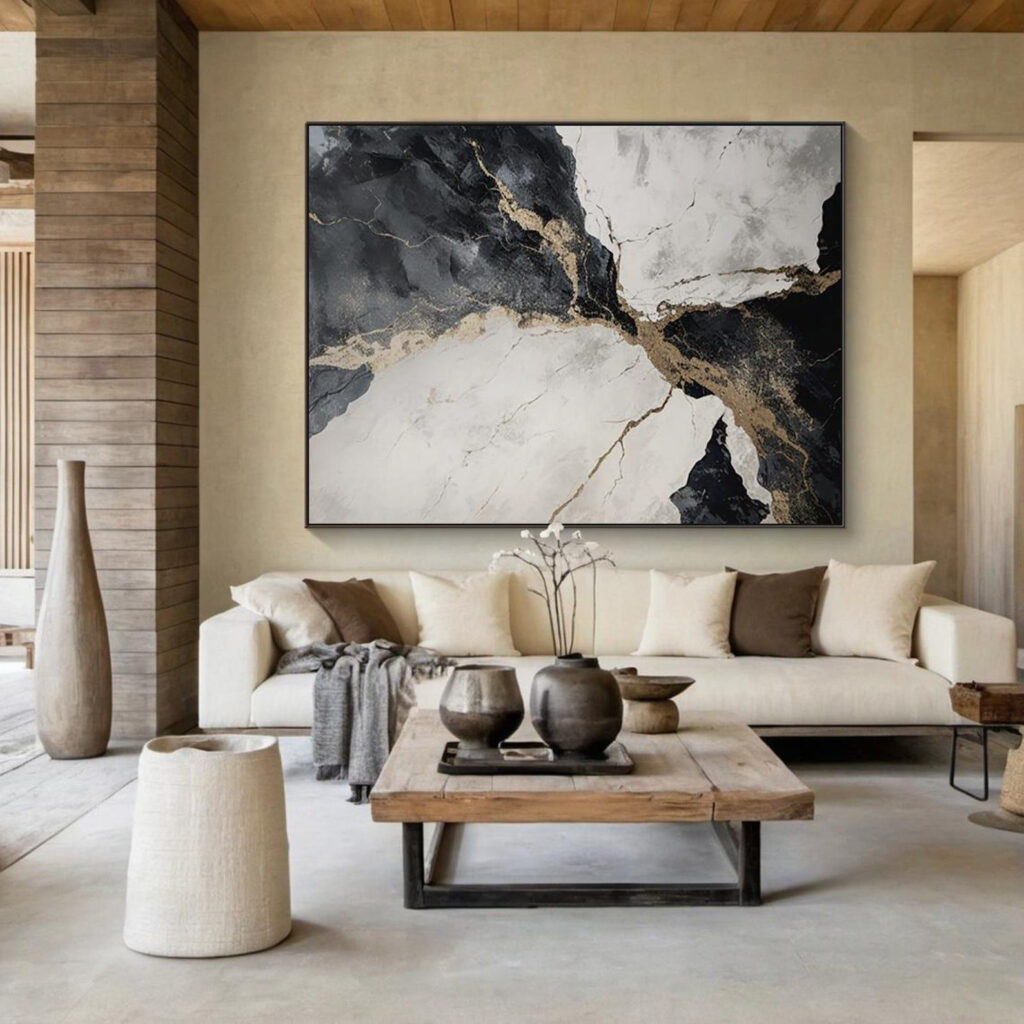
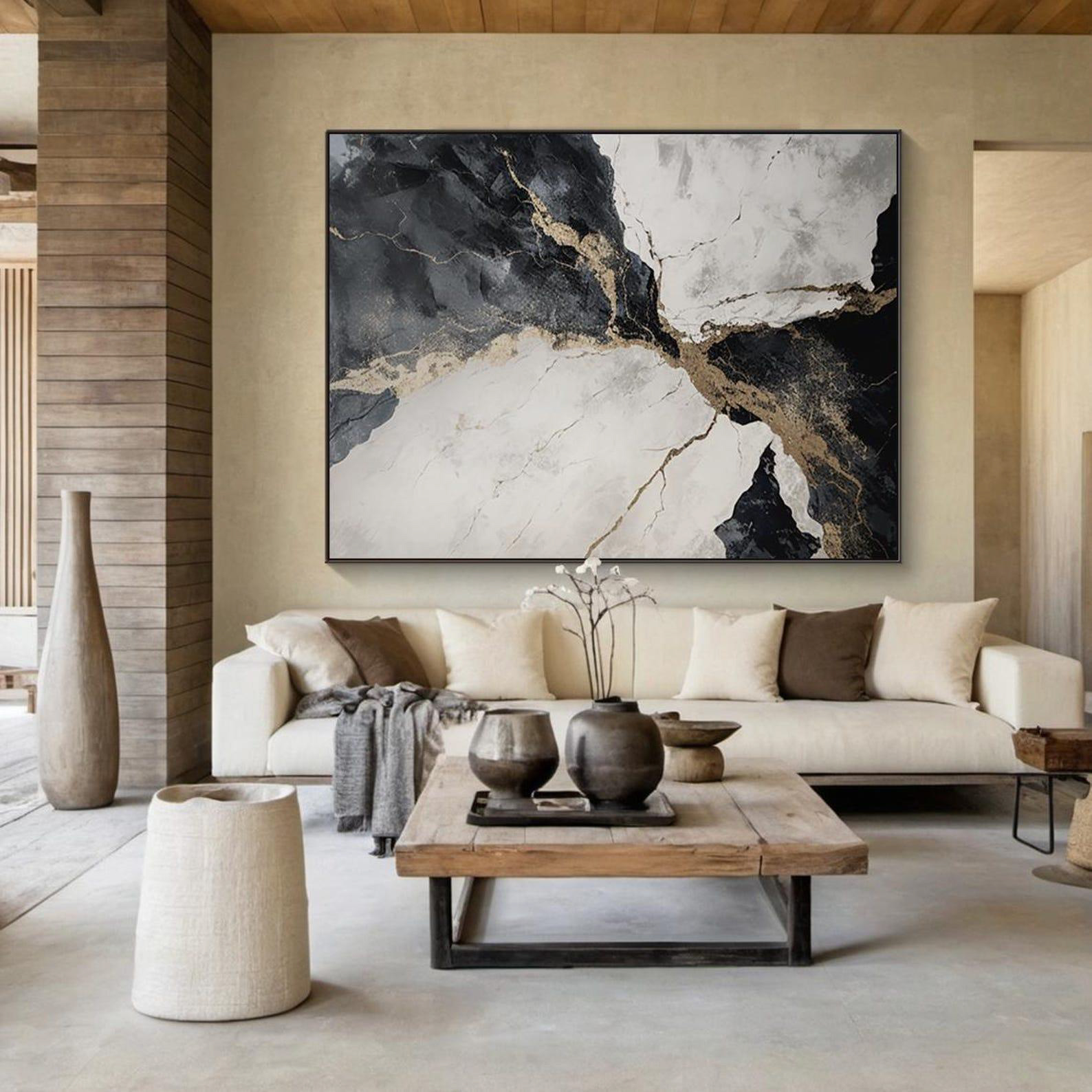
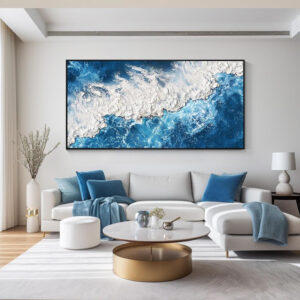
Two matching abstract artworks arranged side by side create a balanced, gallery-inspired display. This arrangement is known as a diptych. For a cohesive appearance, choose two frames with similar dimensions and artwork that shares a complementary color palette. A gap of approximately two to three inches between the frames helps them appear connected. Centre the pair above the sofa and consider the height of the furniture when positioning them.
This arrangement works particularly well in modern living rooms, apartments, and home offices. You can explore more abstract wall art ideas to find artwork that complements your interior.
Make (How to Make)
- Measure the width of your sofa and the available wall space.
- Choose two complementary abstract prints or paintings.
- Cut paper templates and arrange them on the wall with painter’s tape.
- Adjust the spacing and center the arrangement above the sofa.
- Mark the hanging points with a pencil and spirit level.
- Install suitable wall hooks and hang both frames securely.
Materials
- Two matching framed abstract artworks
- Measuring tape
- Spirit level
- Pencil
- Paper templates
- Painter’s tape
- Suitable wall hooks or screws
Benefits
- Creates a balanced focal point above the sofa.
- Makes a large wall feel organized and intentional.
- Connects colors and patterns throughout the room.
- Adds visual interest without occupying floor space.
2. Wall Art for Warm Modern Living Rooms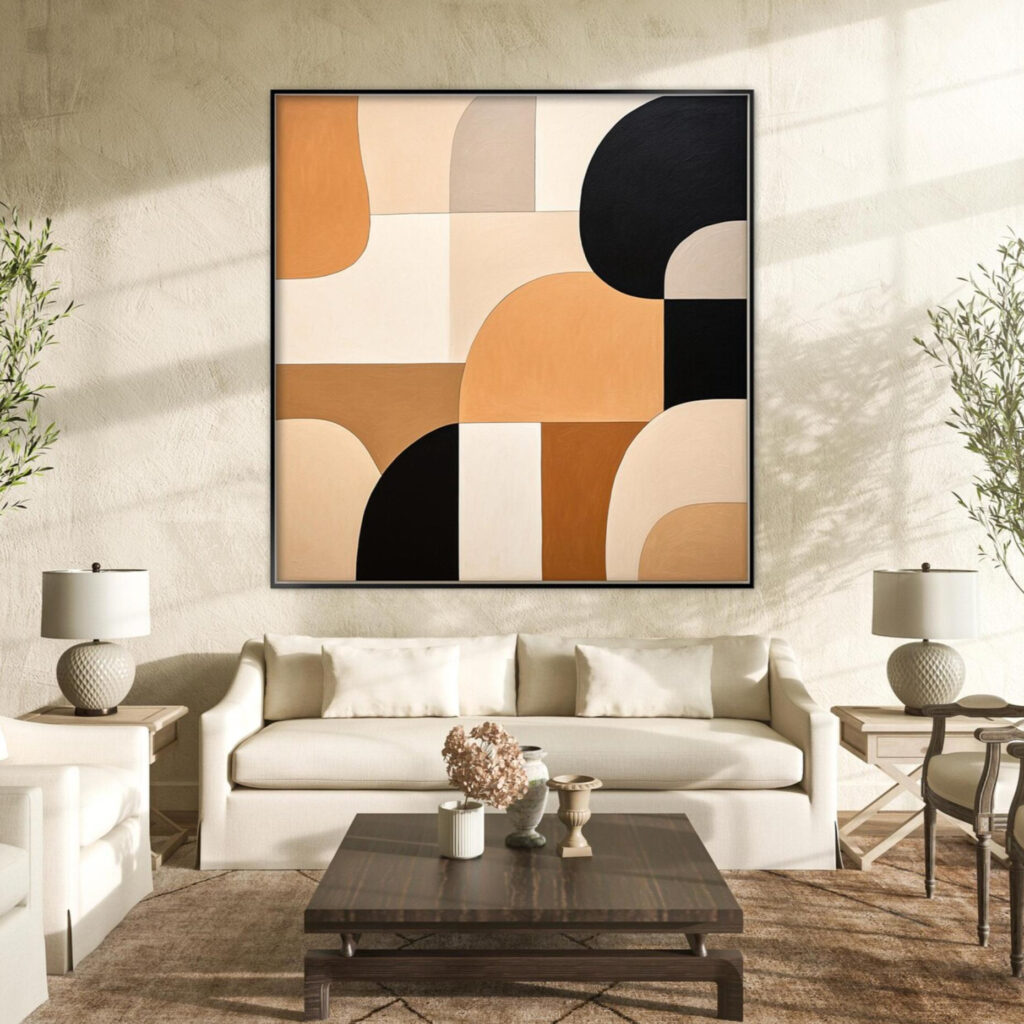
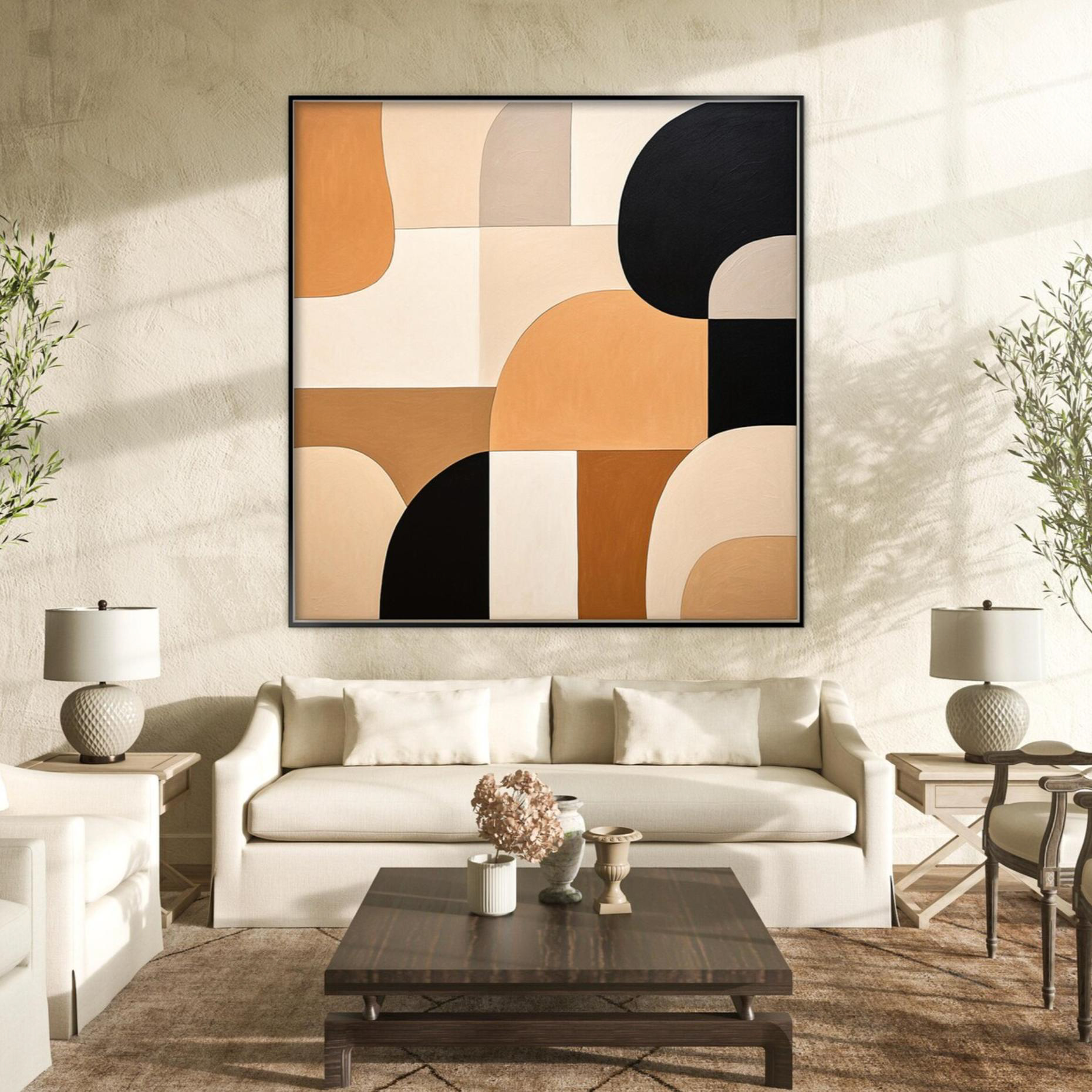
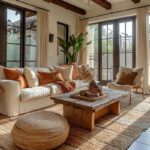
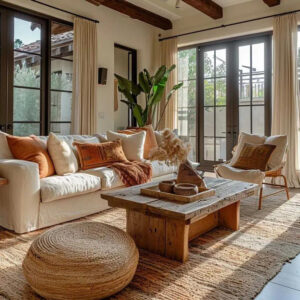
Abstract paintings featuring these colors can complement cream walls, natural wood furniture, and neutral upholstery.
For a coordinated look, choose artwork with a rust-coloured background and a few black geometric shapes or expressive brushstrokes. Keep the surrounding accessories simple so the artwork remains the main attraction. This style suits modern apartments, open-plan living rooms, and interiors with warm neutral palettes.
Make (How to Make)
- Select a canvas and prepare a palette of rust, black, and cream.
- Apply a thin base coat of cream or rust paint.
- Add broad rust-coloured brushstrokes or geometric shapes.
- Introduce black accents to create contrast and movement.
- Allow the painting to dry completely before framing it.
- Hang the finished artwork against a light-colored wall.
Materials
- Canvas or prepared painting board
- Rust-coloured acrylic paint
- Black and cream acrylic paints
- Paintbrushes
- Palette or mixing tray
- Protective table covering
- Frame, if required
Benefits
- Adds warmth and contrast to neutral interiors.
- Creates a distinctive focal point.
- Connects naturally with wood and earthy accessories.
- Offers an opportunity to create personalized artwork.
3. Black Picture Frames for Abstract Wall Art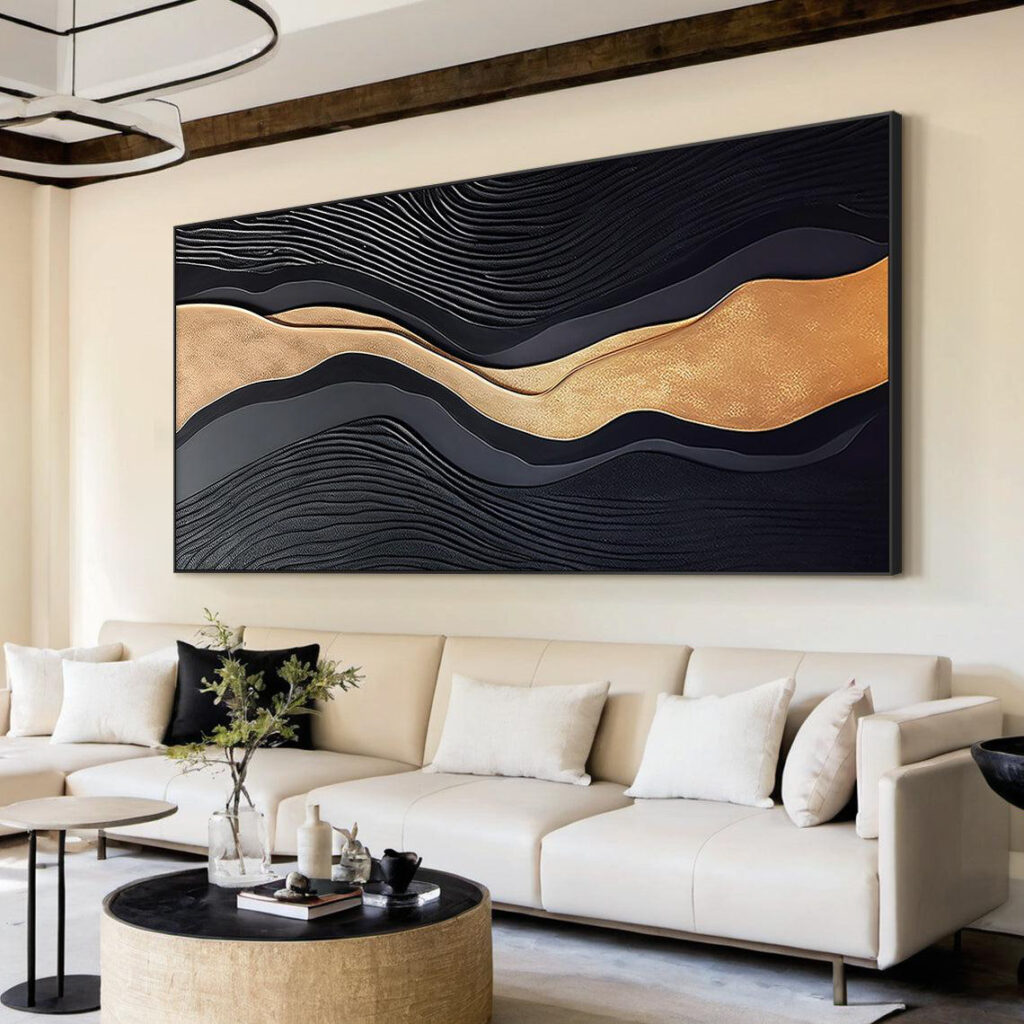
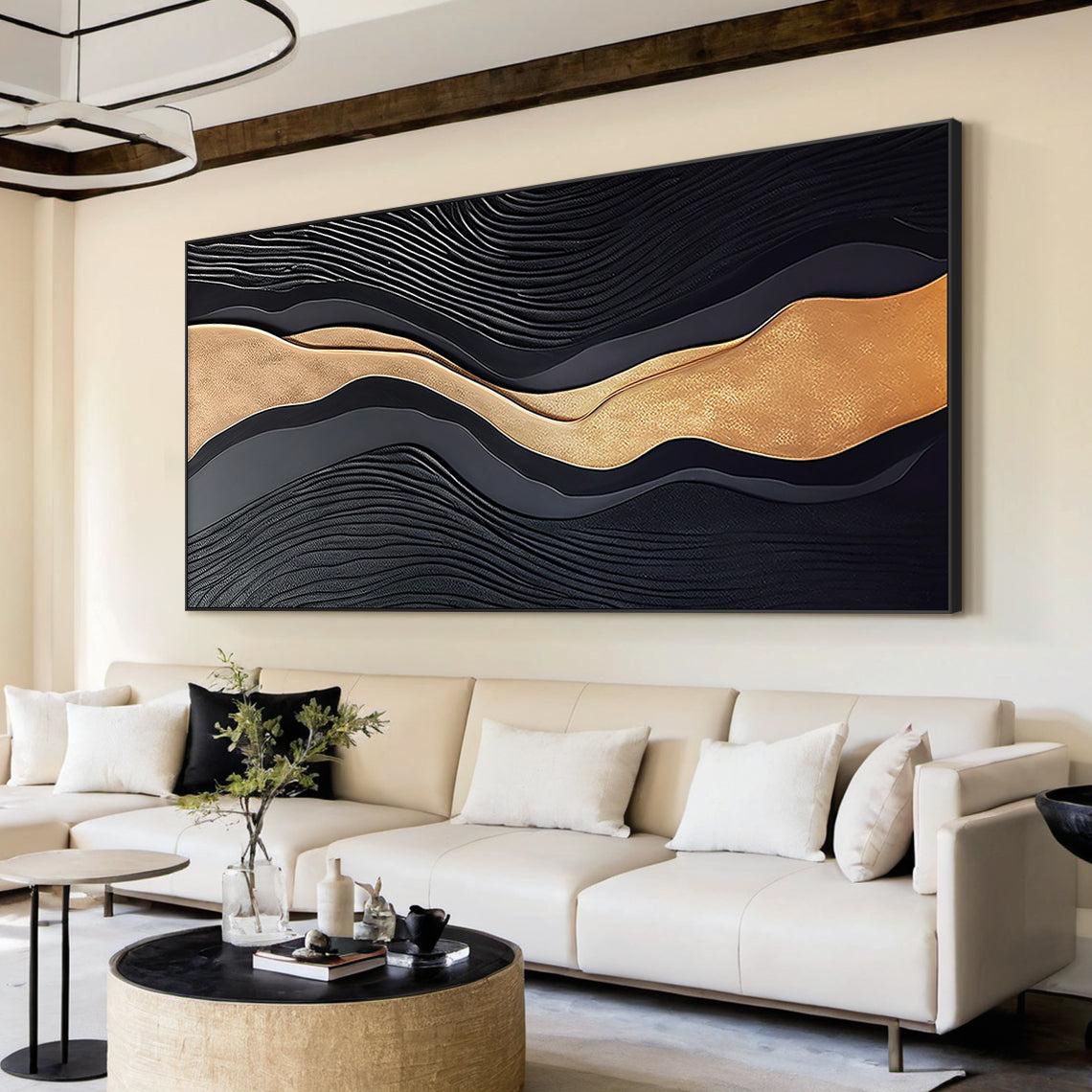
Black picture frames give abstract artwork a clean, defined border. They work particularly well with white walls, beige interiors, and paintings that contain strong lines or contrasting colours. Slim frames suit minimalist spaces, while wider frames can give larger pieces a more substantial appearance.
For a consistent display, choose frames with the same finish and arrange them according to the artwork’s dimensions. A white mat board can provide additional breathing room around smaller prints. Before hanging the frames, check their alignment and use suitable fixings for the wall type.
Make (How to Make)
- Measure the artwork and select a frame of the correct size.
- Choose a slim or wide black frame to match the interior style.
- Add a mat board if you want extra space around the print.
- Secure the artwork inside the frame using the supplied fittings.
- Check the frame backing and hanging hardware.
- Mark the position and hang the frame securely.
Materials
- Black picture frame
- Abstract print or painting
- Optional white mat board
- Measuring tape
- Wall hooks or suitable fixings
- Soft cleaning cloth
Benefits
- Defines the edges of abstract artwork.
- Creates a neat, gallery-inspired appearance.
- Helps different prints look consistent when displayed together.
- Makes it easier to coordinate artwork with black furniture details.
4. White Walls with Bold Abstract Artwork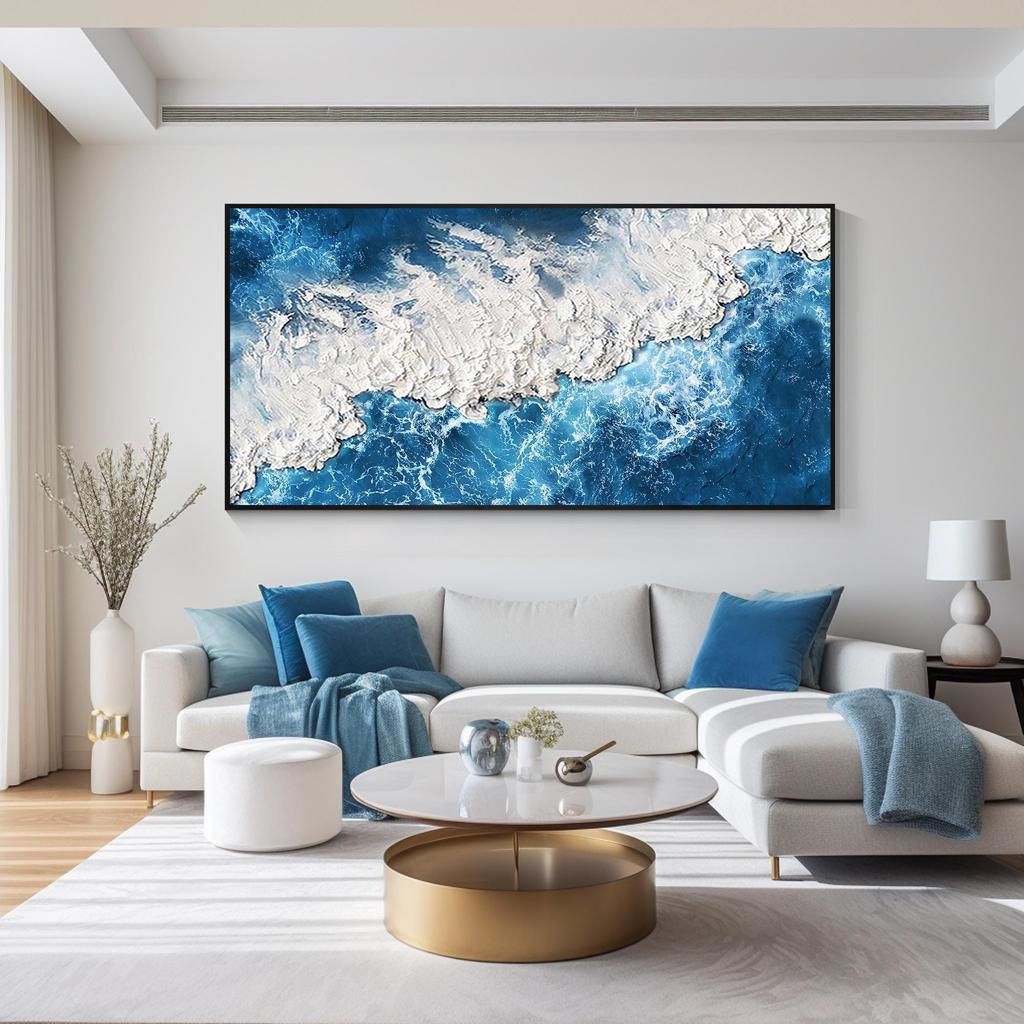
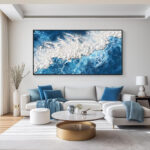
White walls provide a versatile background for bold abstract paintings. Warm white shades can create a welcoming atmosphere, while cooler whites may suit crisp, contemporary interiors. Against a light wall, colorful artwork becomes more noticeable without requiring additional decorative elements.
Choose a painting with colors that complement the sofa, curtains, or rug. For example, a canvas featuring blue, terracotta, and black can add character to a room with neutral furniture. Before painting the wall, test small color samples under both natural and artificial lighting to see how the shade changes throughout the day.
Make (How to Make)
- Clean the wall and fill small holes or cracks.
- Apply primer if the wall surface requires it.
- Test two or three white paint samples in different lighting conditions.
- Choose a suitable interior wall finish.
- Paint the wall and allow it to dry fully.
- Position the abstract artwork where it can stand out without overcrowding the space.
Materials
- Warm white interior wall paint
- Primer, if needed
- Roller and paintbrush
- Painter’s tape
- Wall filler and filling knife
- Drop cloth
- Abstract artwork and hanging hardware
Benefits
- Provides a versatile background for colorful paintings.
- Helps smaller rooms feel brighter.
- Makes statement artwork more noticeable.
- Allows you to update the room by changing the artwork rather than repainting.
5. DIY Geometric Abstract Wall Art Using Painter’s Tape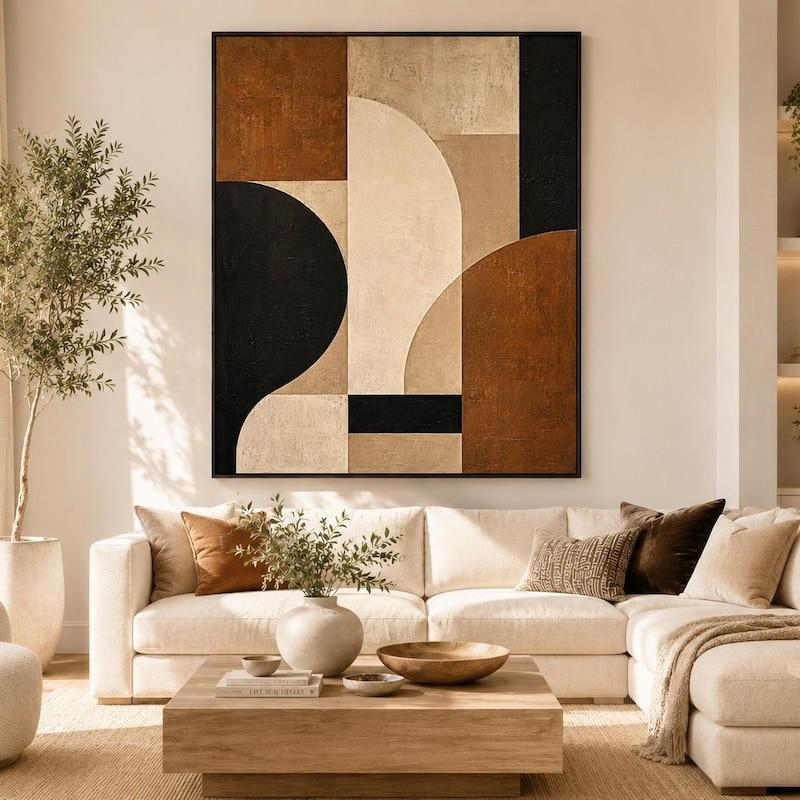
Geometric abstract wall art is a practical option for anyone who wants to create personalized decoration. Squares, triangles, diagonal lines, and rectangles can form an attractive design without requiring advanced painting skills. A limited palette of three colors, such as rust, cream, and black, can keep the finished piece coordinated.
Painter’s tape helps create crisp boundaries between painted areas. For best results, use tape suitable for your canvas or painting surface and press its edges down carefully. Remove the tape according to the paint and tape manufacturers’ instructions to help achieve clean lines.
Make (How to Make)
- Place a blank canvas on a protected, flat surface.
- Sketch a simple geometric design with a pencil and ruler.
- Apply painter’s tape along the lines you want to keep clean.
- Paint each section using your chosen colors.
- Allow the paint to become sufficiently dry before removing the tape, following the product instructions.
- Let the artwork dry completely before displaying or framing it.
Materials
- Blank canvas or prepared board
- Acrylic paints in three complementary colors
- Low-tack painter’s tape
- Flat paintbrushes
- Pencil and ruler
- Mixing palette
- Protective covering for the work surface
Benefits
- Makes personalized wall decoration possible on a budget.
- Allows beginners to experiment with color and shape.
- Can be customized to match existing furniture.
- Creates a unique piece that reflects your personal style.
6. Earth-Tone Abstract Wall Art with Rust Accents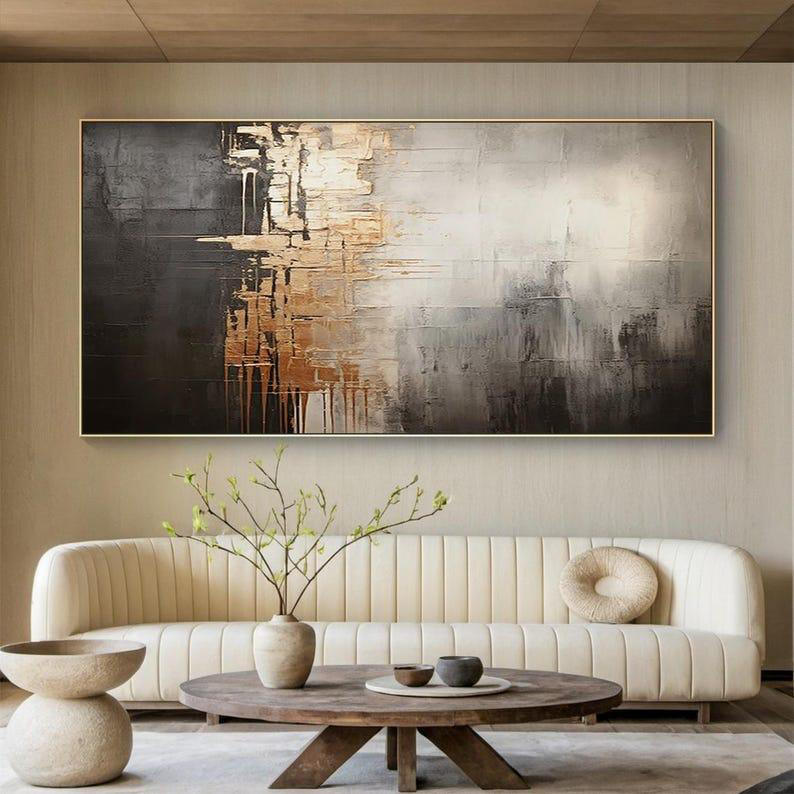
Earth-tone abstract artwork uses colors inspired by natural materials, including beige, clay, terracotta, warm brown, and muted green. These shades can create a relaxed appearance and work well with wood furniture, linen fabrics, and textured accessories.
For a balanced composition, begin with a neutral background and introduce rust-cultured shapes or expressive brushstrokes. Small areas of charcoal or deep brown can add definition without overwhelming the design. Choose artwork that repeats one or two colors already present in the room to make the overall scheme feel connected.
Make (How to Make)
- Select a canvas and choose three or four earthy colors.
- Apply a beige or cream base coat.
- Add broad shapes in rust, terracotta, or warm brown.
- Introduce a small amount of darker paint for contrast.
- Step back occasionally to assess the balance of the composition.
- Let the painting dry before adding a frame or hanging hardware.
Materials
- Canvas or painting board
- Beige or cream acrylic paint
- Rust and terracotta acrylic paints
- Optional brown or charcoal paint
- Paintbrushes or palette knife
- Mixing palette
- Frame, if desired
Benefits
- Creates a warm and relaxed atmosphere.
- Coordinates easily with natural wood and neutral fabrics.
- Adds color without requiring a bright overall palette.
- Can be adapted to rustic, contemporary, and minimalist interiors.
7. How to Choose the Right Size for Large Abstract Wall Art![]() =”https://nestorahaven.com/wp-content/uploads/2026/10/1.jpg” alt=”7. How to Choose the Right Size for Large Abstract Wall Art” width=”794″ height=”556″ />
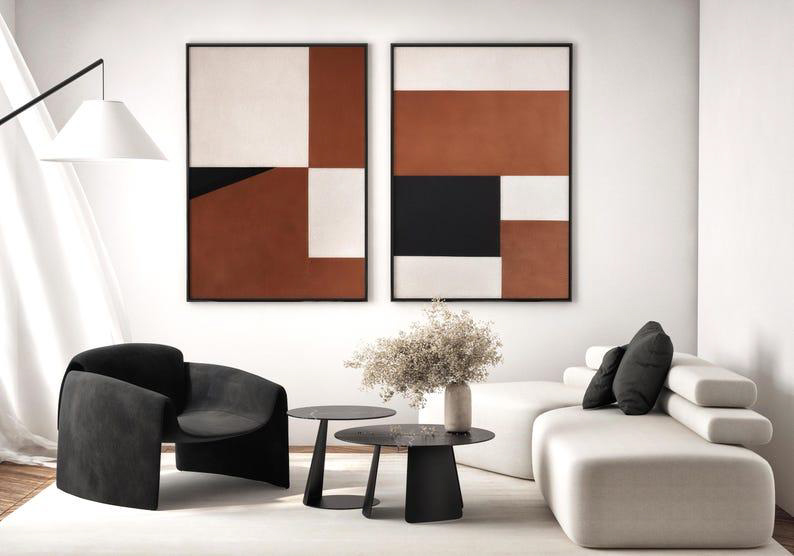 =”https://nestorahaven.com/wp-content/uploads/2026/10/1.jpg” alt=”7. How to Choose the Right Size for Large Abstract Wall Art” width=”794″ height=”556″ />
Choosing the right artwork size is essential for a well-proportioned living room. A small painting may appear disconnected above a large sofa, while an oversized piece can overwhelm a narrow wall. As a useful starting point, artwork above a sofa often looks balanced when its total width is approximately two-thirds of the sofa’s width.
The ideal size also depends on ceiling height, furniture arrangement, and the amount of empty wall space. Paper templates can help you test different dimensions before making holes. If you plan to display several paintings together, measure the complete arrangement rather than considering each frame separately.
Make (How to Make)
- Measure the sofa width and the available wall area.
- Calculate a starting artwork width of around two-thirds of the sofa width.
- Cut paper templates matching the possible artwork dimensions.
- Tape the templates to the wall and assess the proportions.
- Adjust the height and spacing until the arrangement feels balanced.
- Mark the hanging points and use suitable fixings for the artwork’s weight.
Materials
- Measuring tape
- Kraft paper or newspaper
- Painter’s tape
- Pencil
- Spirit level
- Suitable wall hooks or mounting hardware
Benefits
-
-
- Helps prevent artwork from looking too small or oversized.
<li>
-
Reduces unnecessary holes and wall repairs.
- Makes furniture and wall decoration feel more connected.
- Helps you compare layouts before purchasing artwork.
8. Minimalist Abstract Wall Art for Neutral Interiors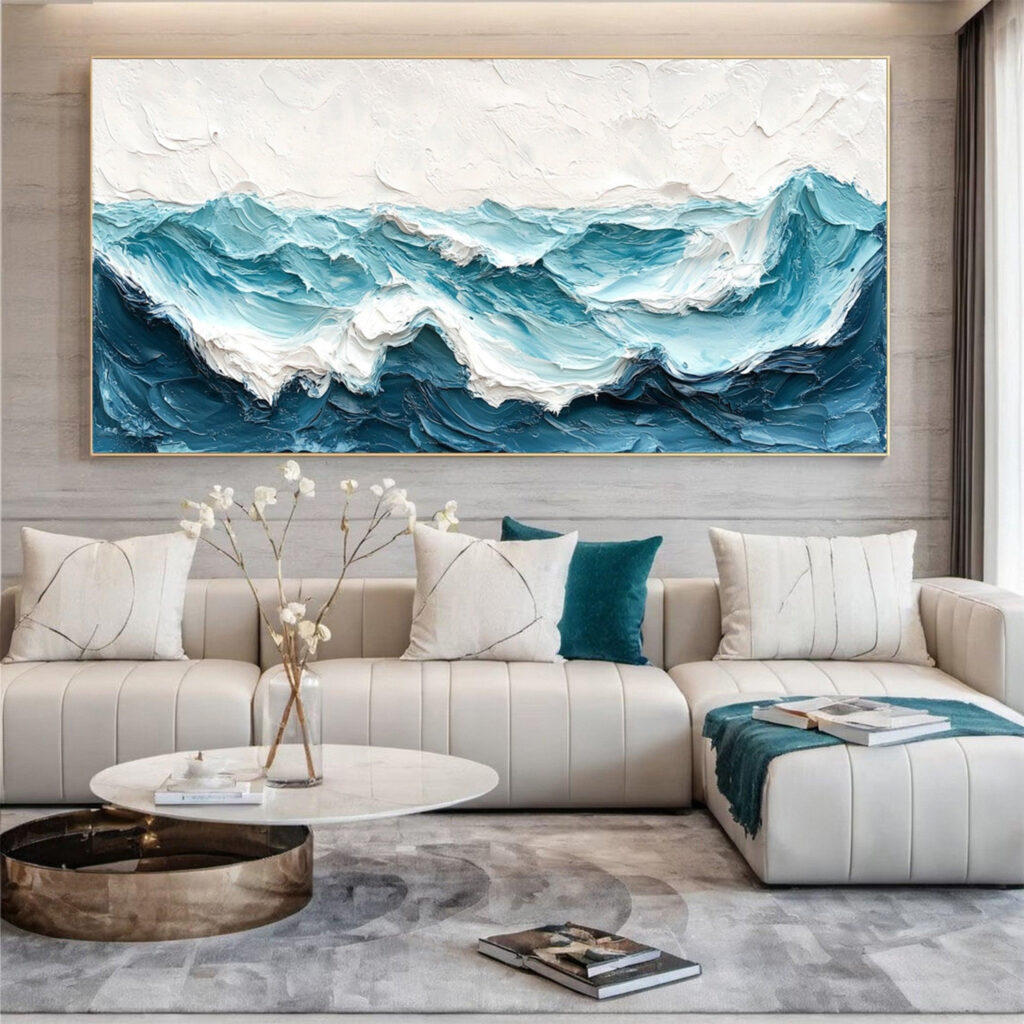
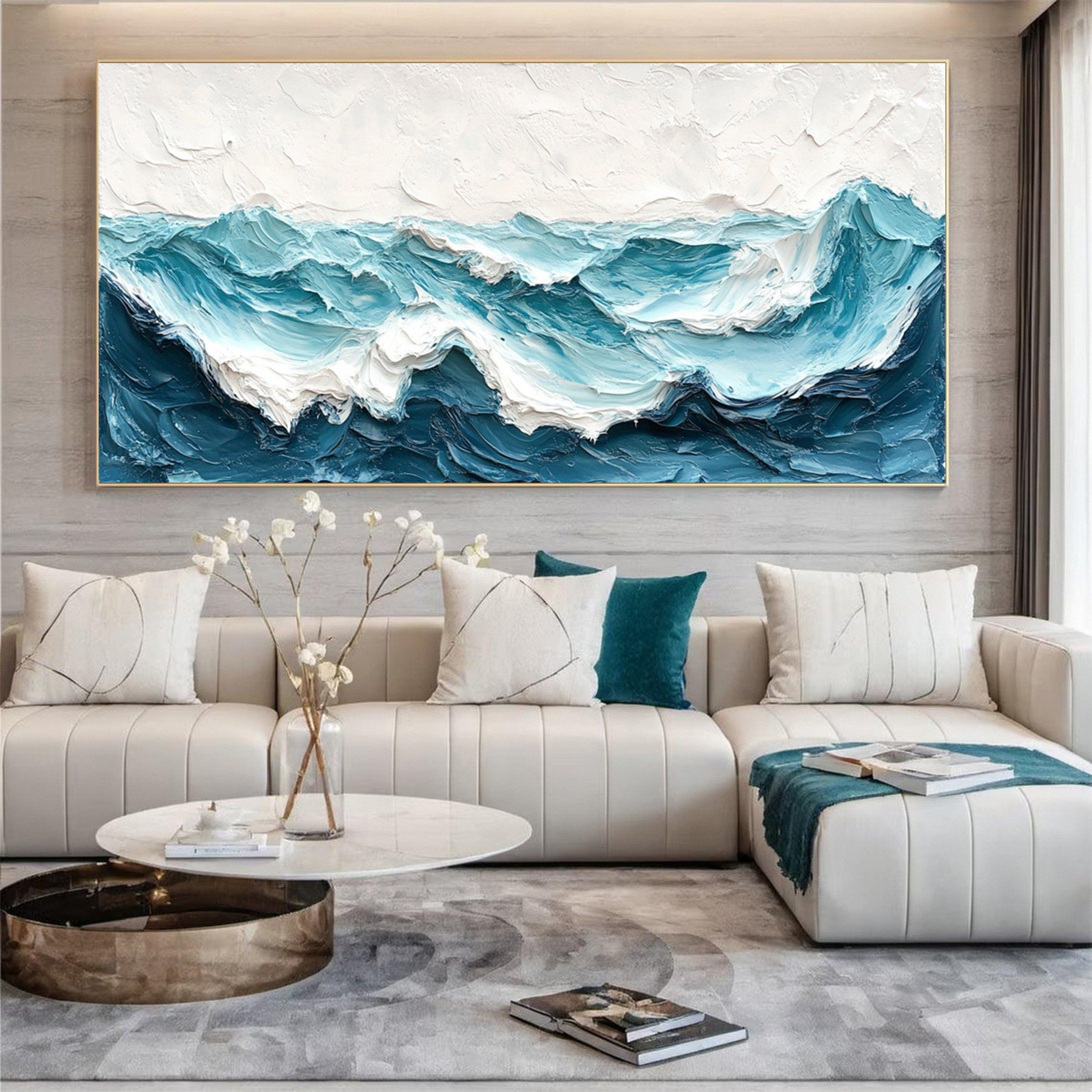
Minimalist abstract wall art focuses on simple forms, restrained colors, and uncluttered compositions. A painting with a few black lines on a cream background, for example, can complement a neutral living room without making it feel busy. Other suitable designs include soft color blocks, curved shapes, and subtle textured surfaces.
The key is to give the artwork enough space to stand out. Avoid surrounding a simple painting with too many competing decorative objects. Instead, coordinate it with a small number of carefully chosen accessories and furniture pieces.
Make (How to Make)
- Choose a simple design with two or three colors.
- Select a canvas that suits the available wall space.
- Apply a neutral base coat if you are creating the artwork yourself.
- Add a few clean lines, curves, or geometric shapes.
- Keep the composition uncluttered and allow the paint to dry.
- Display the finished piece against a simple wall.
Materials
- Canvas or prepared painting board
- Cream, beige, black, or muted-color acrylic paints
- Fine and medium paintbrushes
- Pencil
- Mixing palette
- Optional frame
Benefits
- Complements minimalist and contemporary interiors.
- Adds interest without making the room feel crowded.
- Works well with neutral furniture and simple accessories.
- Offers a timeless alternative to highly detailed artwork.
9. Textured Abstract Wall Art for Added Depth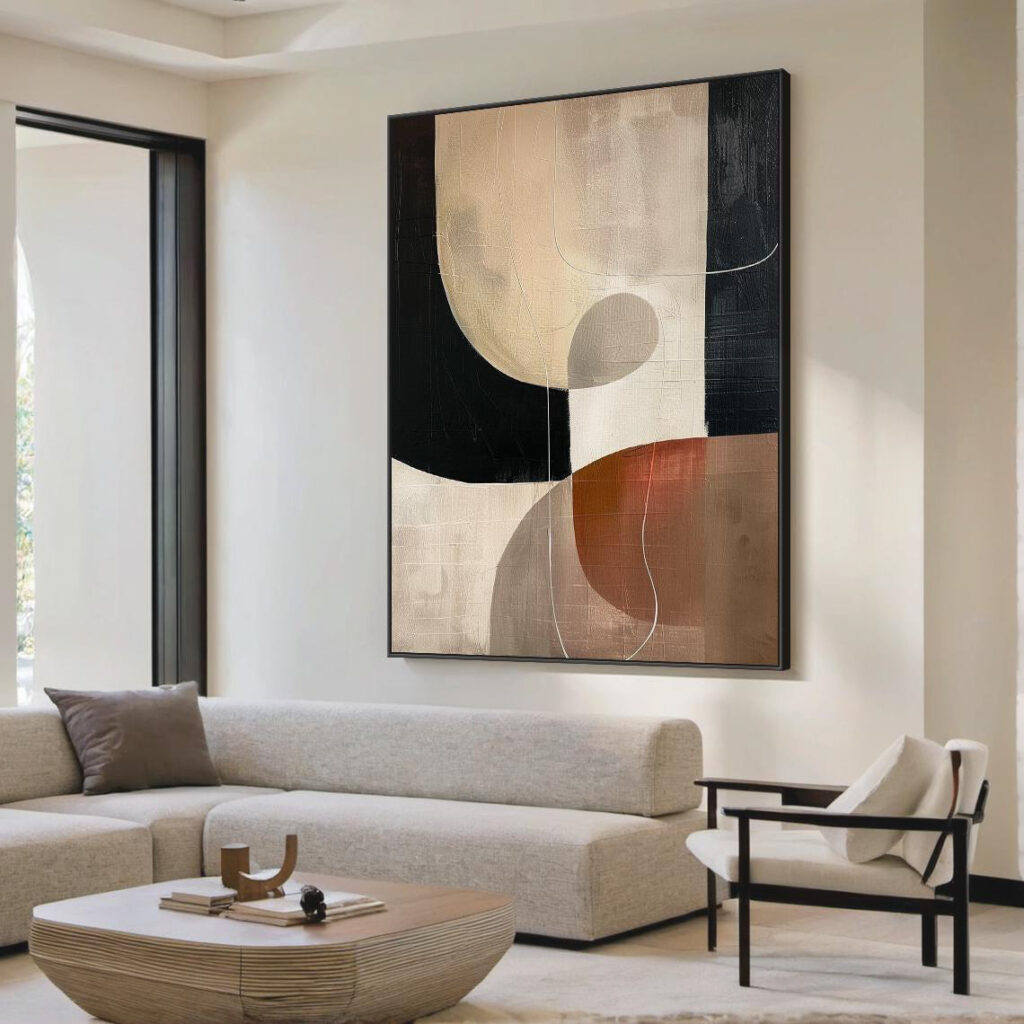
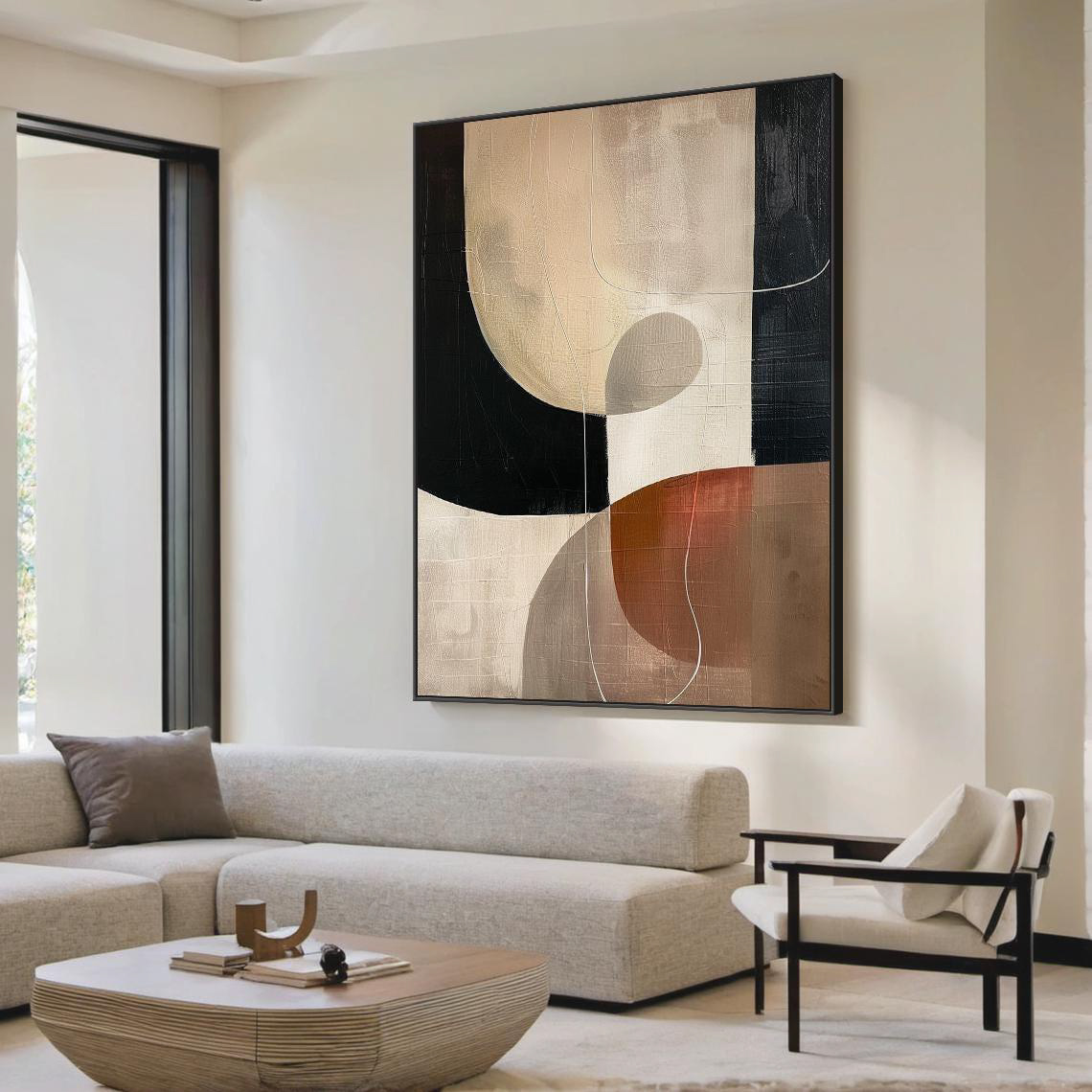
Textured abstract wall art adds visual depth through raised patterns, layered materials, and visible brushstrokes. Cream, beige, and soft white are popular choices for creating a subtle textured effect that complements neutral interiors. Depending on the product, texture can be achieved with modelling paste, heavy-body acrylic paint, or suitable textured art mediums.
Before beginning, check that the chosen medium is compatible with your canvas or board. Apply it according to the manufacturer’s instructions, and allow sufficient drying time. If you prefer a subtle appearance, use gentle curves and layered shapes instead of covering the entire surface with heavy texture.
Make (How to Make)
- Choose a sturdy canvas or board suitable for the selected medium.
- Apply a compatible base coat if required.
- Use a palette knife to spread the texture medium into simple shapes.
- Create curves, ridges, or layered patterns while the medium is workable.
- Allow the piece to dry completely according to the product instructions.
- Add a compatible finish only if recommended for the medium.
Materials
- Sturdy canvas or prepared board</li>
- Acrylic
- paint
- Compatible modelling paste or textured art medium
- Palette knife
- Paintbrush
- Mixing palette
- Protective covering for the work surface
Benefits
- Adds depth and tactile interest to plain walls.
- Creates a subtle focal point through texture rather than bright color.
- Works well with neutral and natural interior schemes.
- Allows you to create a distinctive handmade piece.